

- Home
- A Blue Budget For The EU: Takeaways From Our Workshop At EMD 2026
A blue budget for the EU: takeaways from our workshop at EMD 2026
On 22 May 2026, the Sustainable Blue Economy Partnership hosted a workshop at European Maritime Day in Limassol, Cyprus, bringing together policymakers, researchers and civil society representatives to discuss how EU budget negotiations can better reflect ocean priorities.
The session, entitled "Ocean (Funding) Under the Next Multiannual Financial Framework", focused on a central question: how can the next MFF support the delivery of the EU Ocean Pact?
The Ocean Pact acknowledges that protecting and sustainably using the ocean is not only an environmental matter but also a political, economic and social one. Translating that commitment into practice requires aligned and predictable investment across EU funding instruments. The workshop addressed three main areas: how National and Regional Partnership Plans (NRPPs) can embed ocean priorities, how ocean research and innovation should be positioned in the successor to Horizon Europe and the European Competitiveness Fund, and how different communities can mobilise around blue investment.
The session opened with an Ocean Fun(ding) Quiz before moving to a keynote by MEP Christophe Clergeau, Chair of the SEArica Parliamentary Intergroup on Seas, Rivers, Islands and Coastal Areas. A panel discussion followed, with contributions from Jacques Delsalle, Senior Expert at the European Commission's DG MARE; Giuseppe Sciacca, Director for Maritime Affairs and Climate at CPMR; Rémi Cossetti, Policy Officer at Seas at Risk); and Søren Heinecke, co-lead of the Blue Economy Working Group at ERRIN. Raluca Petrică, Senior Expert at the Romanian Ministry of Research, Innovation and Digitalisation, participated via a recorded message.
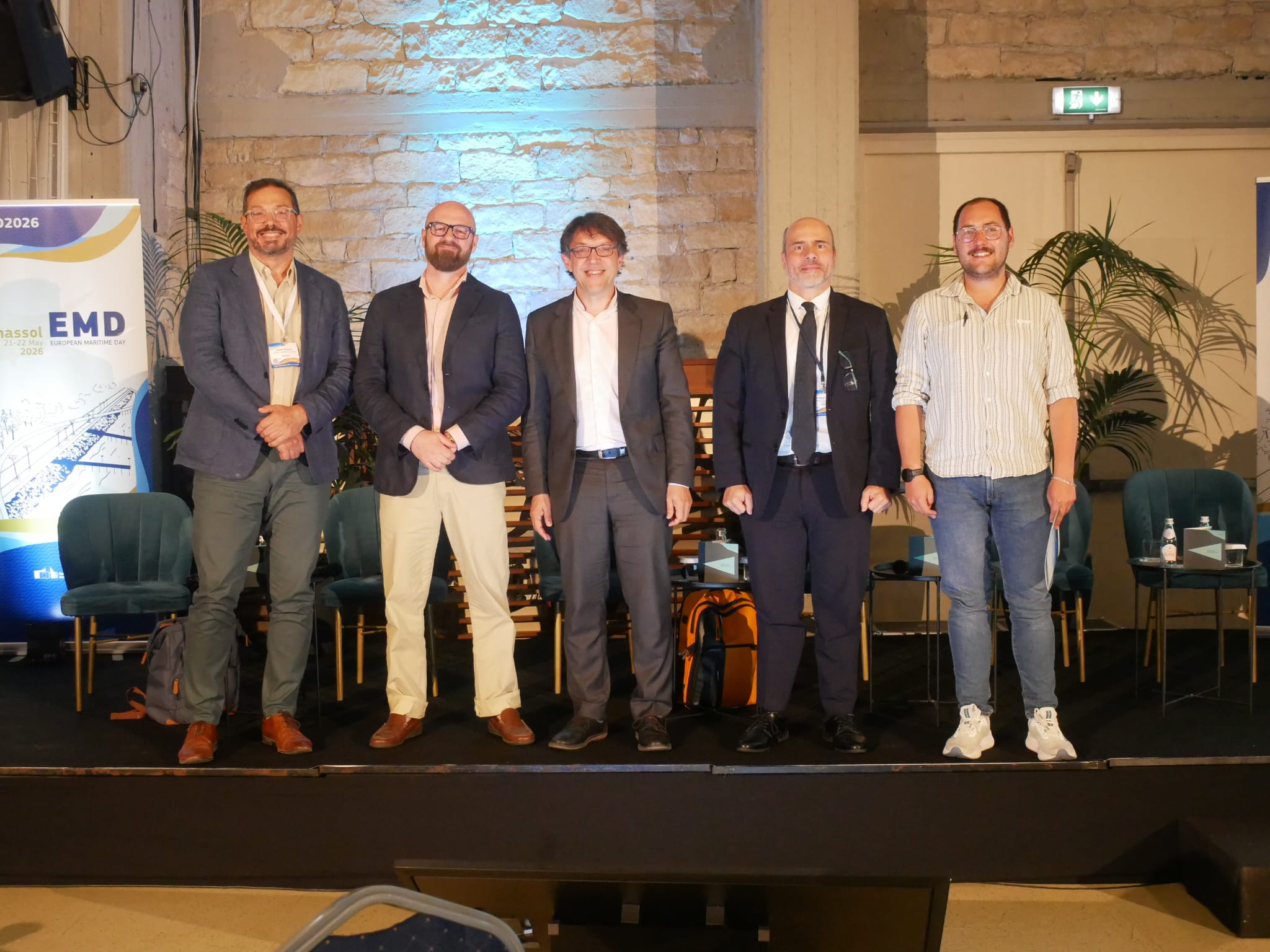
The discussion produced concrete recommendations across three areas. On funding architecture, participants called for clearer ring-fencing of ocean-related budget lines, stronger accountability mechanisms, and the integration of blue economy as a transversal priority connecting NRPPs, the European Competitiveness Fund, FP10 and Smart Specialisation Strategies. On research and innovation, the panel argued that blue innovation should be defined as a horizontal priority in FP10, that future partnerships should be structured for long-term collaboration rather than project-by-project cycles, and that the EU Strategy on Ocean Research and Innovation should cover freshwater, coastal and marine ecosystems in an integrated way. On territorial engagement, speakers highlighted the role of maritime regions in leveraging EU funds and recommended strengthening the sea basin approach and encouraging all maritime regions to develop blue-focused Smart Specialisation Strategies.
A broader message from the session was that a genuinely "blue" MFF is achievable, but it requires Member States to take an active role. Defining strategic roadmaps at national and regional level is a concrete step that can support mobilisation across governance, research and investment communities.
A two-pager with main takeaways from the event is available for consultation here.